









Online Course Creation for Creative Entrepreneurs Is Not What You Think
Online course creation for creative entrepreneurs sounds like the obvious next move until you’re standing in it and realizing it’s basically a second business you didn’t budget for. So many photographers, coaches, and creatives hit a point where they know they have something worth teaching, and they make the leap — only to discover that knowing your craft and transmitting it are two completely different skill sets. I’ve been there. My first course launched in 2019 and every step of the way I was like, “okay, and now I need this thing too?” The learning curve is real, and nobody warns you about it until you’re already in it.
Teaching Is a Skill, Not a Bonus Feature
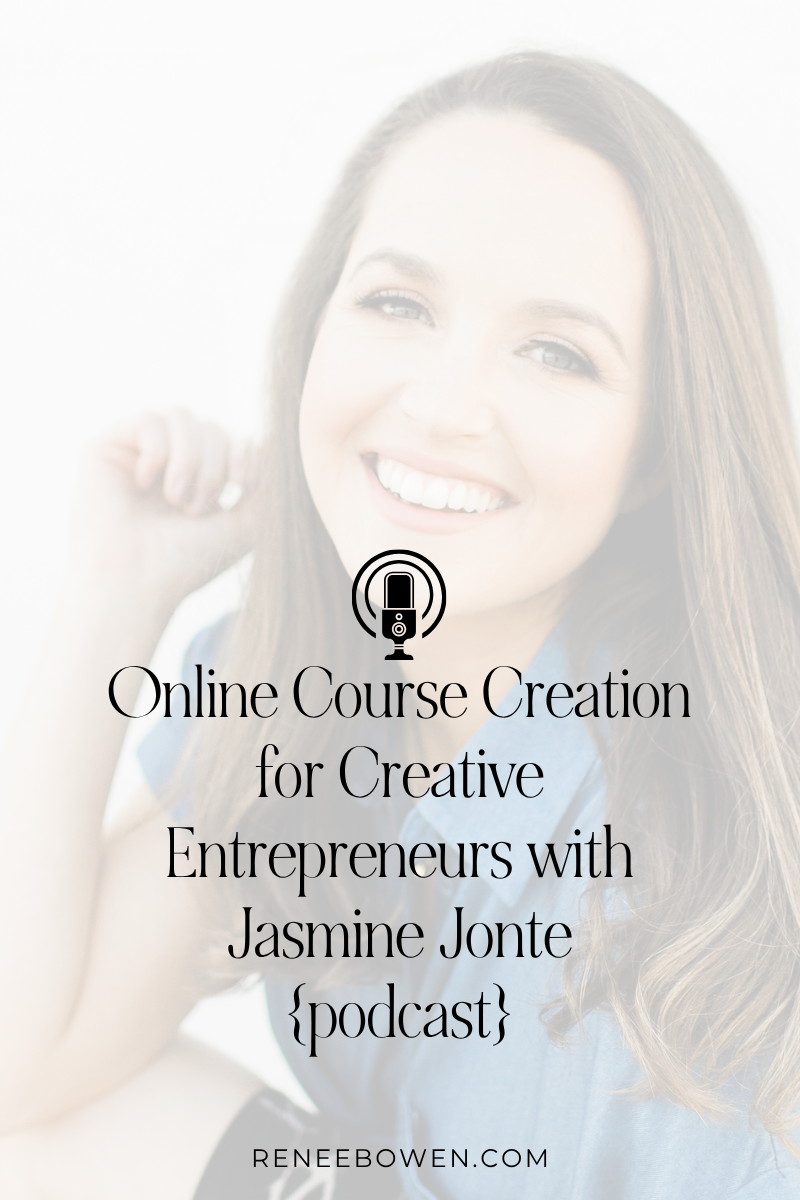
That’s exactly what Jasmine Jonte came on the podcast to talk about, and she does not sugarcoat it. Jasmine is the founder and CEO of Cre8tion, a company that has helped produce over 120 programs and more than 1,500 lessons reaching over 100,000 students. She started her career as a first-grade teacher in Detroit, which means she learned early that getting information into someone’s brain in a way that actually changes them is a craft unto itself. What she brings to the course world is instructional design thinking, and it’s something most creative entrepreneurs skip entirely when they start building. They focus on what they know. She focuses on the learning experience itself. Those are not the same thing.

The Biggest Mistake People Make First
Here’s what Jasmine said that stopped me: when a photographer wants to teach other photographers, they’re not adding to their business. They’re starting a different one. The audience shifts. The marketing shifts. The whole offer model shifts. And if you skip that step of figuring out who this is actually for, you’ll build something technically good that nobody buys. Online course creation for creative entrepreneurs goes sideways most often not because the content is bad, but because the creator assumed their existing audience was their course audience. Sometimes that’s true. Often it’s not. The pressure test she recommends is simple: pull 10 of your most ideal one-on-one clients from memory and ask yourself whether 8 of them would need this information to get the result. If the answer is yes, it belongs in the program. If not, leave it out.
The Human Design Piece Nobody’s Talking About
Jasmine also incorporates Human Design into her client process, and the way she’s using it is genuinely smart. She’s not running full chart readings and calling it a business strategy. She’s looking at authority types to help emotional authorities stop waiting for perfect before they hit record, and she’s looking at profile lines to understand how someone naturally learns. Because here is the thing she said that I haven’t stopped thinking about: most course creators build a learning experience based on how they like to learn, then wonder why some students don’t connect with it. As a 2/4 generator I want to go deep on everything, and I have to actively reel myself back from giving people the full library when they just want the chapter. Your design influences how you teach. Knowing that is a competitive advantage in online course creation for creative entrepreneurs who actually want their students to get results.
What a Transformational Learning Experience Actually Requires
The market has changed. Students in 2026 are not going to be dazzled by volume. They’re not impressed by the 5-module bundle. What they want is the fastest path from where they are to the result they came for, and they want it to feel like it was designed specifically for them. Jasmine’s team builds programs around one core question: what is going to get the student results the fastest? Not what curriculum makes the creator look credible. Not what delivers the most content hours. What actually moves someone from stuck to transformed in the least amount of time. That’s the standard for online course creation for creative entrepreneurs who want their work to hold up in a market that is smarter and more skeptical than it was five years ago.
Start Before You Think You’re Ready
If you’re sitting on knowledge you know could help people, the first move is not to build a course. It’s to own your value. Jasmine put it clearly: write down what you’ve done, what you’re proud of, what you’ve figured out. Then look at who is one chapter behind you and needs exactly what you know right now. You do not need to have everything figured out to start teaching. You just need to know more about this one thing than the person you’re teaching. Online course creation for creative entrepreneurs starts with that permission you keep waiting for someone else to give you. Nobody’s coming. Grab it yourself. Then go listen to this episode.
FAQ
What is the first step to online course creation for creative entrepreneurs? Start with market research before you build anything. Talk to 8 to 10 people who fit your ideal student profile, not just whoever responds to your poll. The conversations will show you exactly what to include and what to leave out.
Do I need a big audience to launch an online course? Not necessarily, but you do need the right audience. A small, engaged group of people who already trust you and want what you’re teaching is more valuable than a large following full of people who would never buy.
How long should my online course be? As short as possible while still delivering the result. The current market wants efficiency. If students can get the outcome in 45 minutes, don’t build a 10-hour course. Design for results, not for impressiveness.
How does Human Design affect online course creation? Your profile line influences how you naturally learn, which means it also shapes how you teach by default. Understanding your design and your students’ design helps you build a learning experience that actually meets people where they are rather than just where you are.
Can creative entrepreneurs really make money with online courses? Yes, but only when the offer is built around a real result for a specific person. The courses that underperform are the ones built on enthusiasm alone without validating the audience, the problem, or the demand first.
How do I know if I’m qualified to teach my expertise? If you know more about this specific thing than the person you’re teaching, you’re qualified. You don’t need to know everything. You need to know this one thing at a level your student doesn’t yet.












Read the Comments +